


I recently attended the Urban Development Institute of Australia’s NSW luncheon, and let me tell you—there’s some electrifying news coming out of the Hunter region that’s going to reshape our real estate market and the way we think about transportation!
Simon Hunter, the Chief Transport Planner from Transport for NSW, took to the stage and shared insights about the Hunter Strategic Regional Integrated Transport Plan (SRITP) (NSW Government, 2024).
This isn’t just another plan; it’s a game-changer for connectivity and growth in the region.
Here’s the scoop: The SRITP is in the midst of a carefully targeted engagement phase, and they’re set for a public exhibition later this year. This exhibition will last about six weeks, giving everyone a chance to dive in, share feedback, and shape the future of our transport infrastructure.
What’s next? In 2025, they’ll refine the plan further, ensuring it meets the needs of our communities and businesses. And mark your calendars—the final Hunter SRITP is slated for release in the second quarter of 2025, pending cabinet approval.
Population Growth Driving Change
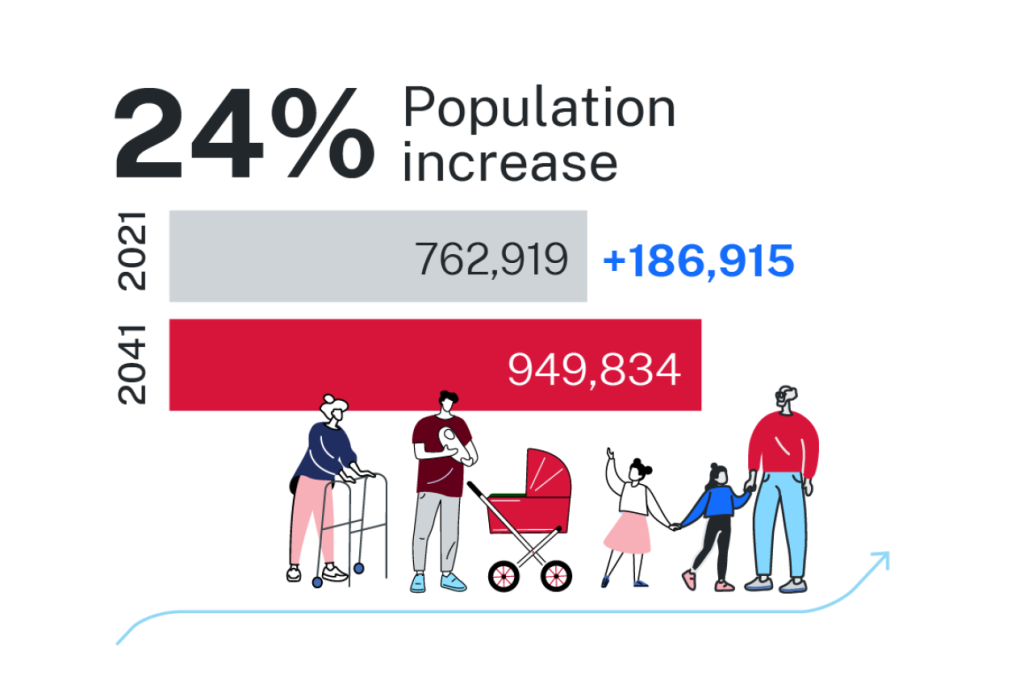
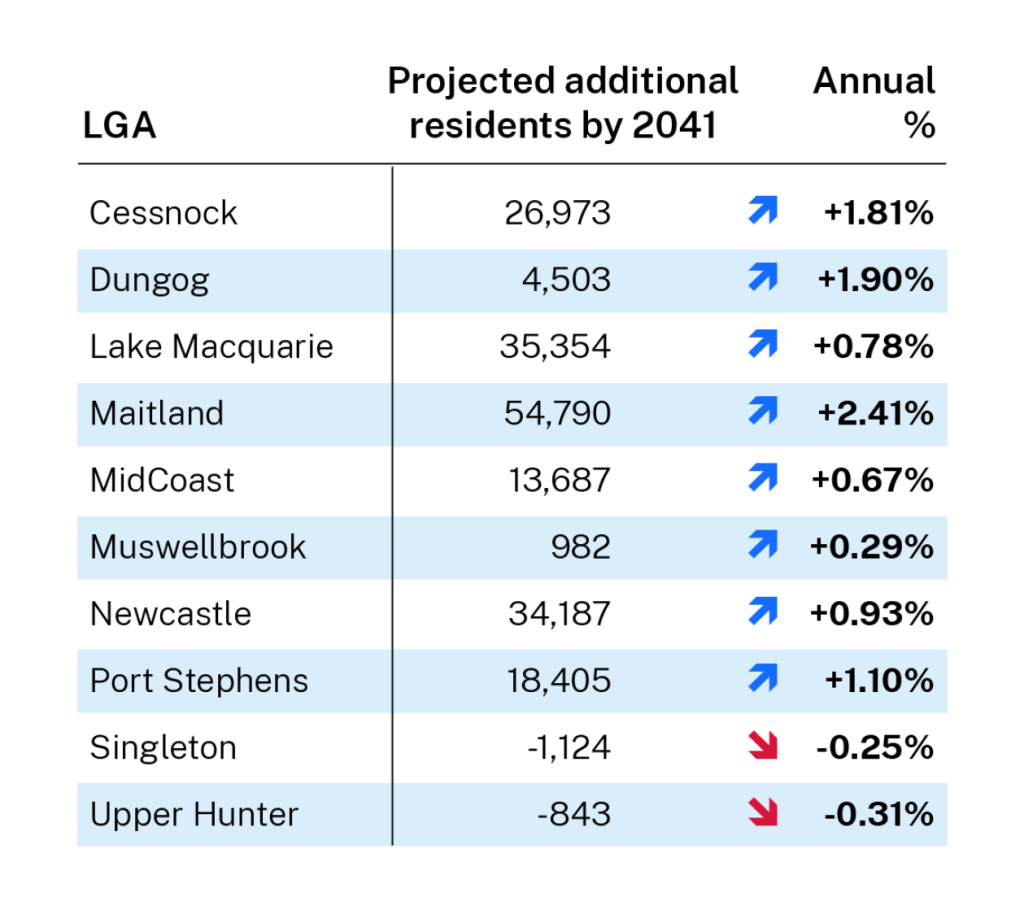
Why does this matter? Since 2021, the Hunter has experienced a staggering 24% population increase! Projections indicate that by 2041, we’ll see Lake Macquarie grow by 35,354 residents at an annual rate of 0.78%. Maitland is on track for an increase of 54,790 residents, a robust 2.41% annually, while Newcastle will add 34,187 residents at 0.93% annually.
With growth like this, effective land use and transport planning are crucial. The Hunter is collaborating with the Department of Planning, Housing and Infrastructure on initiatives such as the Transport Oriented Development Program and the Urban Development Program.
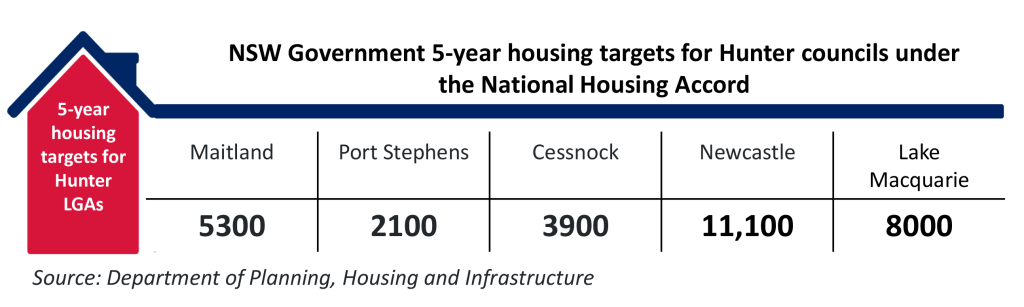
Additionally, the NSW government has set a five-year housing target for Hunter councils under the National Housing Accord, which will further support our thriving communities.
Transport supporting growth areas
Now, let’s talk transport. The infrastructure is gearing up to support growth in key areas, including:
- The Kurri Kurri to Maitland corridor
- Integrated Transport Plans for East Maitland and North West Lake Macquarie
- Newcastle Link Road and Minmi Road
- Mandalong Road, Morisset
But that’s not all! Jason Yeo, a Civil Engineer from ADW Johnson, also presented at the luncheon, outlining the infrastructure investment required in the Hunter area. A total of $421 million is needed over the next five years to support approximately 28,915 dwellings. This investment is crucial, especially considering the five-year housing accord target of 30,400 dwellings, with 95% of this target supported by proactive investments now.
Summary by numbers:
- $1.11 billion over 20 years for 54,000 dwellings
- $421 million over the next 0-5 years for 29,000 dwellings
- $380 million over 5-10 years for 17,500 dwellings
- $306 million beyond 10 years for 7,600 dwellings
- +26,000 dwellings in the pipeline (costs TBD)
- $240 million needed for state roads, with $100 million currently lacking a funding pathway
Summary by actions:
- Provide continued investment in infrastructure and implement improved funding arrangements with Service Authorities
- Provide planning alignment between Transport for NSW strategic plans and development land identified in the Hunter Regional Plan
- Invest in Hunter Strategic Conservation Planning
- Continually support the Urban Development Program with funding and resources
Transport developments reflecting population growth
The transportation developments in Newcastle reflect the booming population and highlight the region’s growth potential. As reported in the Newcastle Herald by Michael Parris (2024), the Newcastle-Sydney high-speed rail is on the horizon, with the potential for construction to start as early as 2027 if federal funding comes through.
This ambitious project plans to have at least half of the Newcastle-to-Sydney route running underground, thanks to about 12 to 18 tunnel boring machines working tirelessly. We’re talking about tunnels that could stretch up to 60 kilometres, passing beneath Sydney Harbour and the northern suburbs. This is a monumental step that will not only enhance connectivity but also revitalise former mine sites along the way.
High Speed Rail Authority chief executive, Tim Parker mentioned the first construction contracts could be signed by 2027, with travel times expected to be groundbreaking: 30 minutes to Gosford, one hour to Sydney’s Central Station, and potentially just 70 minutes to Parramatta!
Imagine what this means for Newcastle and the surrounding areas. Parker highlighted that “they’re already vibrant centres, but, wow, they could really be supercharged by this type of investment.”
Tourism boom on the horizon
And speaking of vibrancy,, let’s not overlook the tourism boom! With the new international terminal at Newcastle Airport set to open next year, we’re gearing up for a tourism surge that aligns perfectly with the state’s ambitious goal of achieving a $91 billion annual visitor economy by 2035 (Falkenmire, 2024).
As noted by Mitchell and Brissenden (2024), the tourism strategy aims to leverage Sydney’s ’first light culture’ to attract more visitors to regional destinations.
Why this matters for real estate
Why is all this significant? Improved transportation means better access to properties, more investment, and a thriving community. This is the kind of forward-thinking strategy that keeps our market dynamic and competitive.
Stay tuned—this is just the beginning of a new era for Hunter and for all of us in real estate!
Cheers,
Ryan
References:
- Department of Planning, Housing and Infrastructure. (n.d.). Department of Planning, Housing and Infrastructure. Retrieved from https://www.nsw.gov.au/departments-and-agencies/department-of-planning-housing-and-infrastructure
- Falkenmire, A. (2024, October 8). Newcastle’s international airport terminal to ‘underpin’ tourism boom. Newcastle Herald.
- Mitchell, A., & Brissenden, N. (2024, October 8). ‘First light culture’ to awaken predicted tourist boom. Newcastle Herald.
- NSW Government. (2024). Hunter Strategic Regional Integrated Transport Plan. Retrieved from https://www.udiansw.com.au/wp-content/uploads/2024/09/SRITP_Hunter-UDIA-Keynote_120924.pdf
- Parris, M. (2024, August 28). Newcastle-Sydney high-speed rail possible by 2037 as tunnel plan emerges. Newcastle Herald.
- Yeo, J. (2024). Lower Hunter Building Blocks: A Practical Approach to Infrastructure and Land Supply. Retrieved from https://www.udiansw.com.au/wp-content/uploads/2024/09/Jason-Yeo-24.09-Hunter-Building-Blocks-presentation-v2.pdf